 EasyToolHub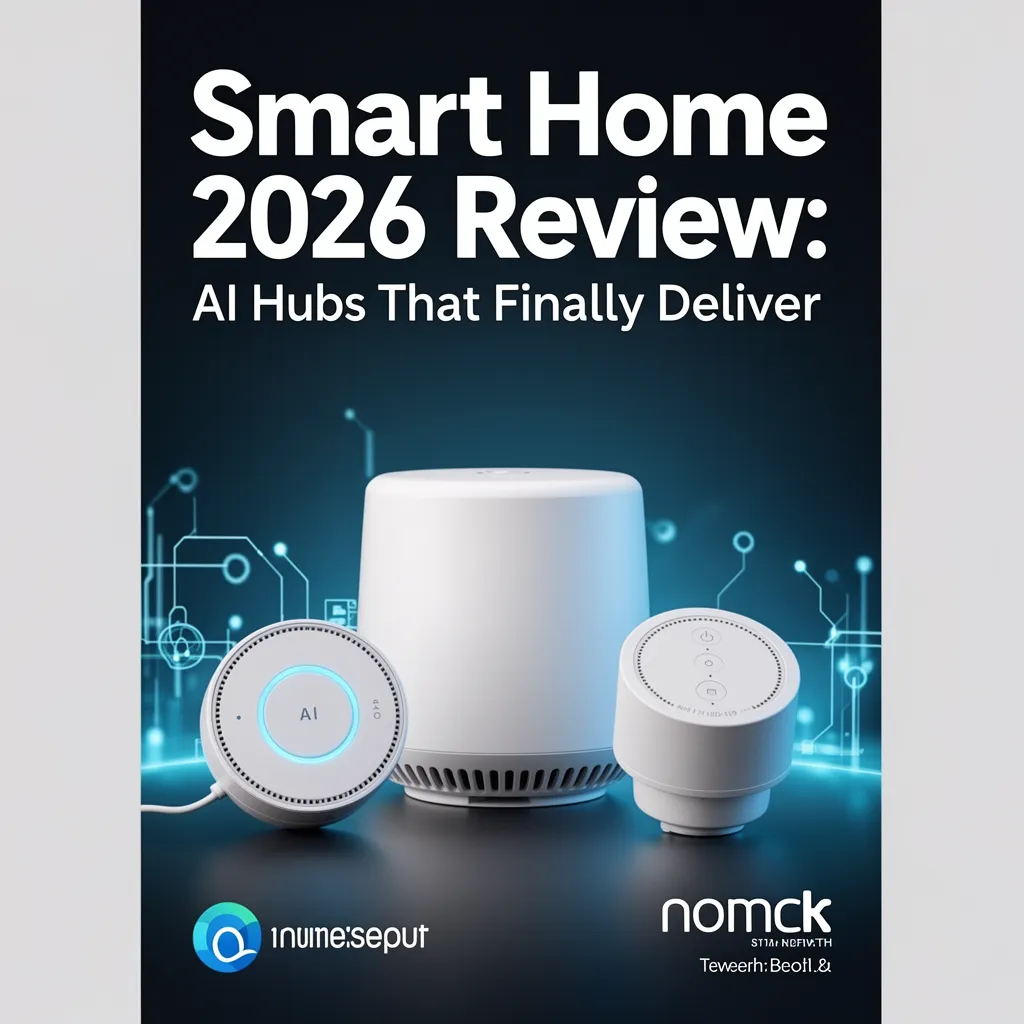
Le contexte : une nouvelle ère d'automatisation
La domotique intelligente en 2026 ne se résume plus à allumer les lumières à la voix. Il s'agit de maisons qui anticipent vos besoins, optimisent l'utilisation de l'énergie et relient parfaitement chaque appareil grâce au standard Matter. Après avoir vécu trois semaines avec les trois principaux hubs — l'Aeotec Smart Home Hub Pro 2026, l'Amazon Echo Hub 4e génération et le Google Nest Hub Max 2 — je peux affirmer avec certitude que la promesse d'une maison intelligente vraiment sans friction s'est enfin concrétisée.
L'évolution Matter fonctionne enfin
Matter 2.0 est l'épine dorsale des trois hubs. L'époque où il fallait vérifier les logos de compatibilité est révolue. Toutes les grandes marques, de Nanoleaf à Bosch, parlent désormais le même langage. La configuration de nouveaux stores Eve MotionBlinds a pris moins d'une minute sur chaque hub, avec une synchronisation immédiate entre Apple Home, Alexa et Google Home. Le hub Aeotec a impressionné par son architecture locale, qui maintient les automatisations actives même en cas de coupure Internet. L'Echo Hub a tiré parti de sa radio Zigbee pour inclure les appareils existants sans pont. Le Nest Hub Max 2 de Google s'est fortement appuyé sur Thread, mais a proposé un outil de migration fluide pour les anciens gadgets Nest.
Une vie prédictive propulsée par l'IA
C'est là que 2026 brille. Le Nest Hub Max 2 a introduit « Home Mind », une IA qui apprend vos habitudes quotidiennes et suggère des automatisations comme « On dirait que vous baissez toujours les stores à 18 h — voulez-vous que je le fasse pour vous ? » L'Echo Hub 4e génération surenchérit avec « Hunches 2.0 », qui non seulement suggère, mais ajuste proactivement le thermostat et l'éclairage en fonction des tarifs énergétiques en temps réel et de votre calendrier. L'IA SmartThings Energy d'Aeotec va encore plus loin : elle utilise la surveillance énergétique par appareil pour décaler le lave-vaisselle et la recharge du véhicule électrique vers les moments où l'électricité est la moins chère ou la plus verte, sans que l'utilisateur n'ait à coder quoi que ce soit.
Points de comparaison : interface, confidentialité et extensibilité
Confrontation sur la gestion de l'énergie
Les trois hubs affichent désormais l'intensité carbone en temps réel et vous permettent de définir un budget énergétique mensuel. La fonction « Bill Guardian » de l'Echo Hub suspend activement les appareils énergivores lorsque vous êtes absent. Le Home Mind de Google suit votre empreinte carbone et éteint automatiquement les appareils électroniques inutilisés. Aeotec, cependant, est le seul à s'interfacer directement avec la plupart des systèmes de batteries domestiques et des onduleurs solaires, ce qui en fait le choix privilégié pour ceux qui visent la neutralité carbone.
Verdict
Après des semaines de test, l'Aeotec Smart Home Hub Pro 2026 est mon choix pour les utilisateurs exigeants et tous ceux qui tiennent à l'indépendance énergétique. Il privilégie la confidentialité et le contrôle local tout en offrant le moteur d'automatisation le plus riche. Le Google Nest Hub Max 2 est le meilleur pour les familles qui souhaitent un écran intelligent tout-en-un avec une IA intuitive. L'Amazon Echo Hub 4e génération reste un compromis solide, surtout si vous voulez des achats vocaux sans effort et un Wi-Fi maillé Broadcom. Pour la première fois, vous ne pouvez pas vraiment vous tromper — mais vos priorités déterminent le gagnant.